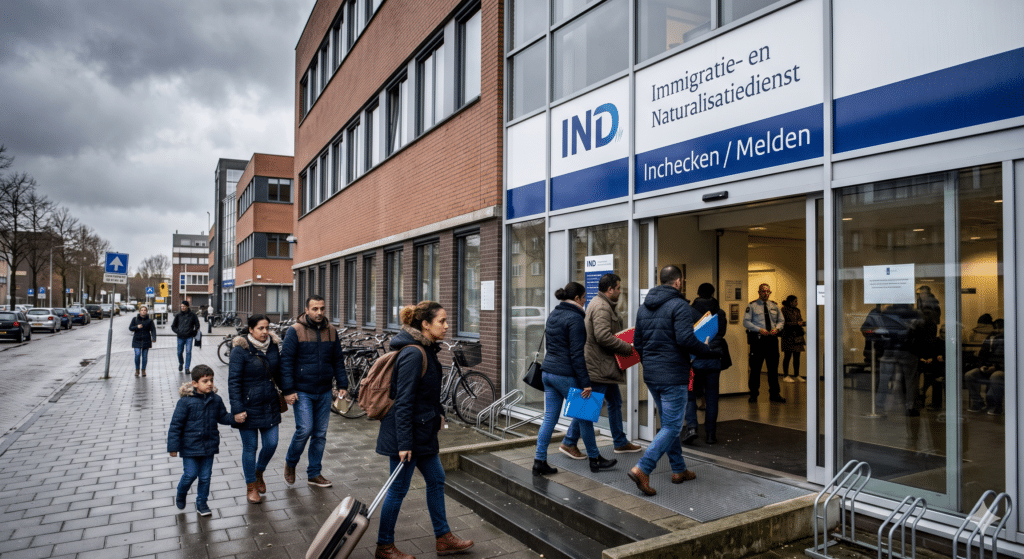
You do not need an immigration lawyer for every Dutch residence permit. For a standard highly skilled migrant application handled by a recognised sponsor, you can usually manage without one; a lawyer earns the fee when the permit route is unclear, the family situation is complicated, the income is hard to prove, or the IND has already refused your application.
Most applications that fail do not fail because the applicant was ineligible. They fail on documents, on procedure, or on the choice of the wrong permit category. An IND decision letter rarely explains what a better application would have looked like.
Below you will find where professional help makes a real difference, what a specialist does that a general adviser does not, and when you are better off keeping the money.
Why do immigration applications fail without legal advice?
Most failed applications fail on avoidable points: a wrong permit category, missing or incorrectly legalised documents, or an income calculation that does not meet the IND’s test. The rules are detailed and change every year.
Dutch immigration law is based on the Aliens Act 2000 (Vreemdelingenwet 2000), the Aliens Decree (Vreemdelingenbesluit 2000), the IND’s policy rules in the Aliens Act Implementation Guidelines (Vreemdelingencirculaire 2000) and several EU directives. The framework is extensive and changes regularly. Income thresholds are adjusted every year, and some of them twice a year. Document requirements depend on the country of origin.
The rules for a highly skilled migrant also differ from those for a family member joining a partner, an entrepreneur or an intra-company transferee. A requirement that is easy to meet in one category can be decisive in another.
An immigration lawyer knows the specific requirements of each permit category and can spot gaps in a file before it is submitted. He or she also knows how the IND applies its policy rules in borderline cases. That combination of procedural knowledge, precise documents and familiarity with IND practice is what separates a well-built application from one that fails on avoidable grounds.
What does an immigration lawyer add to your application?
A lawyer adds most value in seven areas: choosing the right permit, preparing the documents, checking the income requirement, structuring family cases, answering IND questions, handling objections and appeals, and planning your long-term residence. We discuss each of them below.
Choosing the right permit category from the start
The right category is the one that fits your actual situation, not the one that seems closest. A wrong choice usually means starting again.
The Netherlands has many separate residence permit categories: highly skilled migrant (kennismigrant), EU Blue Card, self-employed person or entrepreneur, intra-company transferee, residence with a partner or family member, orientation year for graduates (zoekjaar hoogopgeleiden), long-term residence and more. Each category has its own requirements, processing times and consequences for later applications.
Applying under the wrong category means starting over. You lose time and fees, and sometimes your lawful residence in the meantime.
An immigration lawyer looks at your nationality, type of work, family circumstances and permit history. On that basis, he or she identifies the correct route before anything is submitted. This prevents the common and costly mistake of choosing a category that looks right but does not legally cover your situation.
Complete and correctly prepared documents
The IND only decides on an application that is complete. Foreign documents must usually be legalised or carry an apostille, and they must be translated.
Birth certificates, marriage certificates, divorce decrees and diplomas from outside the EU usually need an apostille or full legalisation through the embassy. If a document is not in Dutch, English, French or German, a sworn translation is generally required. The exact requirements depend on the country that issued the document.
If documents are missing, incorrectly legalised or untranslated, the IND will first ask you to complete the file. If you do not do so in time, the IND can decide not to process the application (niet in behandeling nemen). That is not a refusal on the merits, but you lose processing time and usually the fee.
An immigration lawyer puts together the complete package before submission, so this does not happen.
Meeting the income requirement exactly
Most residence permits come with an income requirement, and the IND tests it strictly. The amounts change every year.
For a highly skilled migrant, the IND sets a minimum gross monthly salary, excluding holiday allowance. From 1 January 2026 the amounts are €5,942 for employees aged 30 or older, €4,357 for employees under 30, and €3,122 under the reduced criterion for recent graduates. The EU Blue Card also requires €5,942, or €4,754 under the reduced criterion.
For a partner or family member joining someone in the Netherlands, the sponsor must have sufficient and lasting income. From 1 July 2026 the IND’s standard amount for residence with a partner is €2,337 gross per month, excluding holiday allowance. Entrepreneurs are assessed differently: their business plan is scored on its value for the Dutch economy.
The calculation is not always simple. It is harder for freelancers, part-time workers, directors-major shareholders (ADI) and people with several sources of income. An immigration lawyer determines whether the requirement is met and, if it falls just short, whether there are alternatives or whether it makes sense to apply later.
Ijikwa ọnọdụ ezinụlọ dị mgbagwoju anya
Family cases are among the most detailed IND procedures. The rules depend on who the sponsor is and what the relationship looks like.
Requirements differ depending on whether the sponsor is Dutch, an EU citizen using free movement rights, or a non-EU national with a residence permit. Whether you are married, in a registered partnership or unmarried partners changes the documents you need. Earlier marriages, children from other relationships and a pending divorce each raise their own legal questions.
For international families whose relationship developed in several countries, the paper trail can be complicated and the IND’s standard of proof is high. An immigration lawyer structures the file to meet that standard and anticipates the questions the IND is likely to ask, before they become grounds for refusal.
Answering IND requests for more information
When the IND asks for more information, your answer can decide the outcome. It has to be complete, on time and to the point.
The IND sometimes sends a request for additional information before it decides. An incomplete or poorly framed response can turn a likely approval into a refusal.
An immigration lawyer prepares the response. He or she determines which questions need documents and which need legal argument. The lawyer also makes sure the answer does not create new problems in the file, for example by raising facts that open a different line of questions.
Objection and appeal after a refusal (bezwaar na beroep)
If the IND refuses your application, you normally have four weeks to lodge an objection (mmegide) with the IND. After a negative decision on the objection, you can appeal (ọrụ) to the administrative court, and after that lodge a further appeal (mkpesa) with the Council of State (Council of State).
The four-week period follows from Article 6:7 of the General Administrative Law Act (Usoro ọgwụgwọ mmiri Algemene, Awb) and starts the day after the decision is sent. A late objection is in principle inadmissible, so the date on the decision letter matters.
This is where legal representation matters most. The grounds of objection must be clearly stated, the relevant rules correctly cited and the argument aimed at the IND’s actual reasoning. A lawyer who regularly handles IND objections and appeals knows which arguments tend to succeed before the administrative courts and which do not. That is specialised procedural knowledge, and it can make a real difference to the outcome.
If you need to stay in the Netherlands while the objection is pending, you may also need to ask the court for a provisional measure (ịgba ọsọ). Whether that is necessary depends on the type of application and your current status.
Planning long-term residence and naturalisation
Each permit decision affects your later options. A gap in lawful residence can delay permanent residence or Dutch citizenship by years.
If you plan to stay in the Netherlands for the long term, individual decisions add up. A refusal, a gap in lawful residence or the wrong permit category can restart the five-year period of continuous residence that you need for a permanent residence permit (verblijfsvergunning voor on bepaalde tijd), or delay naturalisation.
An immigration lawyer advises not just on the current application but on the whole path. Which permit should you hold at each stage? How do you avoid gaps? When can you apply for permanent residence? What are the naturalisation requirements in your situation?
When do you not need an immigration lawyer?
You usually do not need a lawyer for a straightforward application handled by a recognised sponsor. That applies both to employers and to educational institutions.
Where the employer is a recognised sponsor (erkend referent) with the IND, the employer submits the highly skilled migrant application and the process is usually smooth. The same applies to a standard student permit through a recognised educational institution.
Legal help adds most value when one or more of the following applies:
- The facts are complex: mixed nationalities, earlier immigration history or changed circumstances.
- An earlier application was refused.
- It is not clear which permit category applies.
- The family situation is not standard.
- Your goal is long-term residence or naturalisation.
- You are an entrepreneur or self-employed.
Kedu ka Law & More handle immigration matters?
We advise and represent private clients and companies in regular migration matters, in Dutch and English, from our offices in Eindhoven (Marconilaan 13) na Amsterdam. We do not handle asylum cases.
Our immigration work covers:
- Residence permit applications for employees, highly skilled migrants and entrepreneurs.
- Applications for residence with a partner or family member.
- Objection and appeal procedures against IND decisions (bezwaar, beroep, hoger beroep).
- Applications for long-term and permanent residence.
- Usoro maka ịbụ nwa amaala Dutch.
- Immigration advice for companies that bring international employees to the Netherlands.
We also advise on corporate law and iwu ọrụ. That is useful for international businesses and entrepreneurs who deal with immigration and setting up a business in the Netherlands at the same time. You can reach us at +31 40 369 06 80 or by email at info@lawandmore.nl.
Na nchịkọta
- For a standard highly skilled migrant application through a recognised sponsor, you usually do not need a lawyer.
- A lawyer adds most value when the permit route is unclear, the family situation is complex, the income is hard to prove, or you are self-employed.
- Income thresholds change every year; from 1 January 2026 a highly skilled migrant aged 30 or older needs at least €5,942 gross per month.
- After a refusal you normally have four weeks to lodge an objection; get advice before you file it.
- Plan ahead: gaps in lawful residence can delay permanent residence and naturalisation.
Ọtụtụ mgbe Ẹbụp Ajụjụ
Achọrọ m ọkaiwu maka ngwa IND na Netherlands?
No, legal representation is not required. Most applicants with a straightforward highly skilled migrant application through a recognised sponsor manage without one. For complex cases, non-standard family situations or an objection after a refusal, a lawyer can make a real difference.
Ogologo oge ole ka IND na-ewe iji kpebie ngwa ikike obibi?
The general legal decision period for a regular residence permit is 90 days, and the IND can extend it in certain cases. Applications for highly skilled migrants through a recognised sponsor are usually decided much faster, often within about two weeks. Applications for family members often take longer. The IND publishes current processing times on its website.
Kedu ihe ga-eme ma ọ bụrụ na IND ajụ akwụkwọ anamachọihe m?
You can lodge an objection (bezwaar) with the IND, normally within four weeks after the decision was sent. If the objection is rejected, you can appeal (beroep) to the administrative court, also within four weeks. Get advice before you file the objection: the grounds you raise then shape the rest of the procedure.
Enwere m ike ịrụ ọrụ na Netherlands mgbe ngwa m na-aga n'ihu?
That depends on the permit you applied for and your current status. In many cases the IND places a sticker in your passport stating whether you may work while the application is pending. This is not automatic for every category, so check your situation before you start work.
Kedu ihe dị iche n'etiti akwụkwọ ikike obibi na akwụkwọ ikike ọrụ na Netherlands?
For many non-EU nationals, a single permit (gecombineerde vergunning voor verblijf en arbeid, GVVA) covers both residence and work. A separate work permit (TWV) is still needed in some categories. For highly skilled migrants, the residence permit itself allows work as a highly skilled migrant; if you change employer, the new employer must also be a recognised sponsor and report the change to the IND.
Ogologo oge ole ka m ga-ebi na Netherlands tupu m etinye akwụkwọ maka obibi na-adịgide adịgide?
In principle you need five years of continuous lawful residence. Gaps in lawful residence can restart the period. You usually also need to have passed the civic integration exam (inburgeringsexamen), unless an exemption applies, and meet the income requirement. The exact conditions depend on the permits you held during those five years.
Law & More advises private clients and employers on residence permits, family migration and objections against IND decisions. Unsure where you stand? Tell us about your situation. We will let you know your options within one working day.
Kedu Law & More enwere ike inyere gị aka na nke a ka akọwara na anyị onye ọka iwu ọpụpụ page.