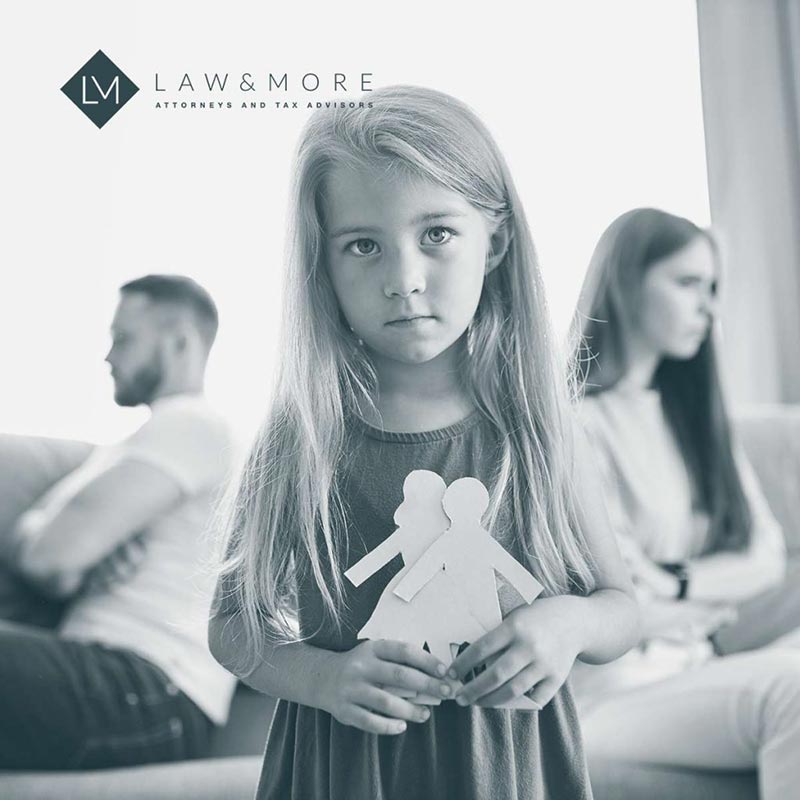
Where divorcing parents can communicate, almost everything else becomes cheaper and faster: a parenting plan they draft themselves, a joint petition and a quicker decision. Where they cannot, the same questions go to the district court (rechtbank) and are decided by a judge who does not know the family. That is why communication is a legal subject in Dutch family practice, not only a personal one.
The law reinforces this. Under Article 815(3) of the Dutch Code of Civil Procedure (Rv), the parenting plan (ouderschapsplan) must record how parents will inform and consult one another about important matters concerning the children. A court faced with persistent conflict can refer parents to mediation (Article 818 Rv), appoint a special representative for the child (bijzondere curator, Article 1:250 of the Dutch Civil Code, BW), or take the conflict into account when deciding where the children live.
Gịnị mere nkwurịta okwu na onye ị lụrụ ọhụrụ ji dị oke mkpa?
Because the way you talk to each other decides whether you make the arrangements together or a judge makes them for you. Under Article 1:247(4) BW, your child is entitled to equal care and upbringing by both parents after the divorce, and that requires you to keep consulting each other for years.
Over the years, partners often develop a fixed pattern in how they react to each other. When communication fails, it is usually not because of the content but because of the way things are said. A divorce is the moment to break that pattern, because joint parental authority (gezamenlijk gezag) continues after the divorce as the main rule under Article 1:251 BW.
Kedu ka ịgba alụkwaghịm nwere ike isi metụta ụmụ gị?
A divorce can affect children emotionally and in their behaviour, especially when the separation is marked by intense conflict. A stable bond with both parents is the most important protection, which is why the law gives the child a right to contact with both parents (Article 1:377a BW).
Children may struggle with low self-esteem, behavioural problems, anxiety or low mood, and the more conflict, the more serious the effects tend to be. Young children need a parent who offers calm, security and stability to build a secure attachment; continued safe contact with each parent protects that. Where parents cannot agree and the child is at risk, the court can ask the Child Care and Protection Board (Raad voor de Kinderbescherming) to investigate and advise.
Gịnị bụ esemokwu iguzosi ike n'ihe, oleekwa otu esi ezere ya?
Nsogbu iguzosi ike n'ihe na-ebilite mgbe nwatakịrị chere na ọ ga-ahọrọ n'etiti nne na nna ya. Ị na-ezere ya site n'ime ka o doo nwa gị anya na a na-ekwe ka ọ hụ nne ma ọ bụ nna ya n'anya ma nwee obi ụtọ na oge ya na ya.
Almost every child is loyal to both parents. In a complex divorce, parents sometimes push their child to choose, consciously or not, or lean on the child for emotional support. Children then try to please both parents. An example to illustrate: a child tells the father the weekend was great, but tells the mother it was terribly boring. It helps a great deal to hear from one parent that it is fine to have a good time with the other.
Children aged 12 and over are invited by the court to give their views on the arrangements (Article 809 Rv). A child caught in a loyalty conflict will find that conversation much harder, which is another reason to keep the child out of the dispute.
Kedu ka gị na onye ị lụrụ ọhụrụ si akparịta ụka nke ọma?
Talk face to face, take one subject at a time and stay calm and respectful. These practical points keep the conversation open while you work on the parenting plan:
- Meet and talk face to face. Avoid making difficult decisions by WhatsApp or over the phone.
- Listen, respond only to what the other person actually says, and leave out matters that are not relevant to this conversation.
- If emotions run high, pause the conversation and continue later when you are both calmer.
- Do not put all your demands on the table at once. Decide one subject at a time: care schedule, holidays, school, costs.
- Avoid absolute words such as “always” and “never”, and aim to reach agreement rather than to deny the other parent things.
- Prepare each conversation and agree that irritations are raised directly, not kept bottled up.
Ebee ka ị ga-enweta nkwado ma ọ bụrụ na ịgba alụkwaghịm ahụ siri ike?
From a mediator, from your lawyer, and for your children from the municipal youth services (jeugdhulp), which every municipality must provide under the Youth Act (Jeugdwet). If you cannot agree yourselves, a family mediator can help you reach agreements that end up in the parenting plan.
Ọ bụrụ na ị na-eme atụmatụ a ịgba alụkwaghịm with children, the agreements on care, information, consultation and child maintenance must be in the parenting plan that you submit to the court with your petition (Article 815(2) Rv). If you cannot submit one, the petition must explain why, and the court may still require agreements.
Gịnị bụ isi ihe dị mkpa iji mebie nkwekọrịta?
Put your children’s interests first and ask what they would want. The court applies the same test: in every decision on authority, care and contact, the best interests of the child are a primary consideration (Article 3 UN Convention on the Rights of the Child).
Recognising the pattern in which you are both trapped is the first step towards stopping it. Ask yourself honestly what makes you shut down in discussions with the other parent; that is usually where the key lies. If the deadlock concerns a single decision, such as a change of school or a move, either parent can ask the court to decide that issue alone under Article 1:253a BW.
Gịnị ka anyị nwere ike imere gị gbasara ịgba alụkwaghịm na ụmụaka?
Anyị ndị ọka iwu ịgba alụkwaghịm help you turn your agreements into enforceable arrangements.
- We draft the parenting plan, including the information and consultation arrangements of Article 815(3) Rv.
- We calculate child maintenance and record it in the plan.
- We refer you to a family mediator and record the outcome of mediation.
- We file the petition with the district court and represent you at the hearing.
- We file a request under Article 1:253a BW when you cannot agree on a single decision.
Summary
- Ezigbo nkwurịta okwu na-enye gị ohere ime ndokwa nke gị; ọ bụrụ na ọ bụghị ya, onye ọkaikpe ga-ekpebiri gị.
- The parenting plan must state how you will inform and consult each other about the children (Article 815(3) Rv).
- Esemokwu na-aga n'ihu n'etiti ndị nne na nna nwere ike imebi ọdịmma ụmụaka, njikọ aka na mmepe ha.
- Zere esemokwu iguzosi ike n'ihe: gwa nwa gị na ọ dị mma inwe oge na nne ma ọ bụ nna nke ọzọ.
- Talk face to face, one subject at a time, and use a mediator when talking directly no longer works.
Ọtụtụ mgbe Ẹbụp Ajụjụ
Is a parenting plan required when we divorce?
Yes, if you have minor children. Under Article 815 Rv the parenting plan must be filed with the divorce petition and must cover at least the division of care, how you inform and consult each other, and the costs of care and upbringing.
Can the court order us to go to mediation?
The court can refer you to a mediator under Article 818 Rv, but it cannot force you to reach agreement. If mediation fails, the court decides the disputed issues itself.
Will the judge listen to our children?
Children aged 12 and over are invited by the court to give their views (Article 809 Rv). The child can choose to talk to the judge, write a letter or do neither.